Published
How the K-Pop Trainee System Works: Contracts and Odds
A clear guide to the K-pop trainee system: 2026 audition routes, the 3-year trainee contract, monthly evaluations and what debut odds really mean.

The K-pop trainee system is an apprenticeship run by entertainment companies. An agency picks teenagers at auditions, signs them to a trainee contract, pays for their lessons, and decides later whether to build a debut group around them. Under the culture ministry's standard form, a trainee contract can't run longer than three years, and nothing in it promises a debut. The part nobody can give you honestly is a single debut-odds number, and the sections below explain why.
How the K-pop trainee system works, step by step
The ministry's standard form defines a trainee in plain terms. A trainee is someone who contracts with an agency in order to receive training that builds the skills needed to work as a performer. That's the whole legal idea. Everything else, from the dorm stories to the cut-throat reputation, sits on top of it.
The path usually looks like this:
- Audition. Open calls, online video submissions, weekly walk-ins, street casting, an academy showcase or a TV competition.
- Trainee contract. Signed with the agency, with a term of up to three years.
- Training. Vocal, dance, rap, language and manners classes. A 2019 government survey found training happened three to four times a week on average, and 37.8% of agencies trained five or more times a week, up from 23.0% in 2016.
- Evaluations. Regular performance reviews that decide who stays and who gets pulled into a debut team.
- Debut team and artist contract. The debut team (데뷔조, "debut-jo") is the group of trainees an agency has set aside to prepare as one specific act. Those members then sign exclusive artist contracts.
Time and money are the two numbers that surprise people. A Mystic Story executive said in 2024 that agencies mostly recruit around age 12, the last year of elementary school, and that the road to debut takes roughly four to six years. He estimated the spend from casting to debut album used to be 100 to 200 million won and now starts at around 1 billion won. That's roughly $700,000 at about 1,400 won to the dollar, and the figure is one executive's estimate rather than audited data.
K-pop auditions in 2026: open calls, global tours and walk-ins
The audition map changed a lot this year, so older guides are partly out of date.
JYP ended its open audition. Its 20th open trainee audition started in Gwangju on January 17, moved through Daejeon, Busan and Daegu, and finished in Seoul on January 31 and February 1, as the last open audition JYP hosts. Entrants had to be born between 2008 and 2016 and pick one of five categories: vocal, rap, dance, modeling or acting. You can read the details in JYP's announcement of its final open audition. JYP says it will shift toward global auditions and other forms of scouting.
SM kept its tour format. The 2026 SM Global Audition began in Busan on January 10, ended its Korean leg in Seoul, then visited 21 locations worldwide, and anyone born between 2007 and 2015 could apply through the SM audition website. The programme launched in 2006. The schedule for SM's 2026 Global Audition lists every stop.
A walk-in option appeared in Gangnam. Lee Soo-man, SM's founder, started a weekly Sunday audition from 1 p.m. to 5 p.m. at A2O Entertainment Korea in Gangnam. No prior screening is required, and anyone can audition in vocals, rap, dance or acting regardless of nationality or gender. The Korea Times covered Lee Soo-man's walk-in Sunday audition in March 2026.

A few practical points apply to all of them:
- Age windows are narrow. For 2026 intakes, the birth years above translate to roughly 10 to 19 years old.
- Applying is free. Submitting through official portals costs nothing, and third parties who charge to "submit your audition" are almost always scams.
- Academies are a side door. One idol academy told Bizhankook that around 70 agencies would be watching its showcase. That's the academy's own claim, and I couldn't verify what its lessons cost.
- TV is a different route with its own baggage. Mnet's Produce 101 (2016) turned the trainee pipeline into a voted competition, which let agencies build fan interest before debut. Its producer later admitted to manipulating the rankings in all four seasons.
The trainee contract: a three-year cap and who pays
This is the one area of the K-pop trainee system where you can check the rules yourself. The culture ministry (MCST) published a standard trainee contract in 2019. The current notice, No. 2025-0069, took effect on January 1, 2026, and still says the term can't exceed three years. You can read the ministry's standard trainee contract form on the national law site.
The cap matters because of what came before. The first KOCCA industry survey, in 2015, found the average trainee contract ran about 41.3 months, and 41.4% of contracts were for five years or more. It also found that 28.9% of trainees were minors. About a third of trainees had no written contract at all.
On money, the form works like this. The agency bears training costs in principle, and if the trainee later signs an exclusive contract, those costs can be deducted from earnings, with the method negotiated separately. The agency has to keep a separate account of direct training costs for each trainee and hand over the details on request. If a trainee deliberately breaks the contract to sign elsewhere, the agency can claim a penalty of up to 50% of direct training costs. The ministry's own 2019 draft of the trainee contract set out all three points.
Bizhankook's reporting adds a critical angle. The standard contracts describe trainees as providing services but don't recognise them as workers.
Extra rules for minors
If the trainee is a minor, the agency and trainee must also sign the ministry's standard addendum for youth. Here "youth" means anyone under 19. The addendum sets weekly limits:
| Age | Weekly limit | Night hours |
|---|---|---|
| Under 15 | 35 hours | Banned 10 p.m. to 6 a.m. |
| 15 to under 19 | 40 hours | Banned 10 p.m. to 6 a.m. |
Both limits can be extended by up to one hour a day and six hours a week if the parties agree. The addendum also lets a youth artist end the contract if the agency or its staff commit violence, sexual violence or abuse. Critics aren't convinced the limits work in practice. One analysis in Bizhankook says it's impossible to monitor them in the field.
What changes at debut: the seven-year artist contract
Debut swaps the trainee contract for an exclusive artist contract, and the seven-year rule is the most misunderstood number in K-pop. It came out of the 2009 TVXQ dispute, which involved a 13-year term and a profit clause that paid nothing unless an album sold 500,000 copies, and the Fair Trade Commission then wrote standard contracts for singers and actors.
For actors, seven years is a ceiling. For singers it works differently. A singer has no explicit term limit, but can claim termination once a contract passes seven years, and it ends six months after notice. Longer terms are possible by separate agreement when there's a justified reason, such as overseas activity. So seven years is a default, not a law of nature.
Agencies say the default no longer fits. One executive at a major agency said break-even used to arrive in years two or three after debut and now arrives in years four or five. Artists' side of the argument looks different. Some critics say the standard form lacks protections for agencies, which has led to more contract lawsuits. Both sides are arguing about the same seven years.
Monthly evaluations: how they run and where they fall short
Most descriptions of the K-pop trainee system agree on the shape. Evaluations happen monthly or quarterly, and trainees perform in front of staff and trainers who score them. The format is common enough that private idol academies copy it. One academy holds its review on the last Saturday of each month, with vocal and dance trainers and agency staff scoring, and sends written reports to parents.
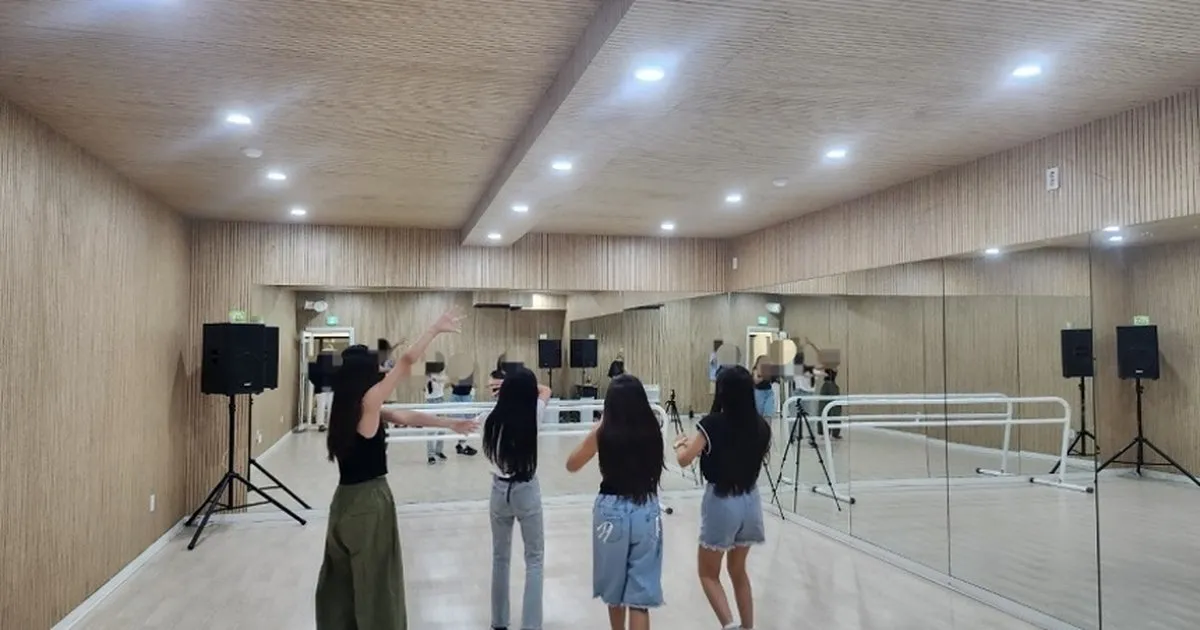
The weak point is what happens after the scoring. A Kyunghyang Shinmun column from September 27, 2026, written from an NGO perspective, argues the system lacks standards. It says trainees compete for debut-team spots through monthly evaluations, but without an organised scoring system, so outcomes lean on the preferences of a few officials. It also describes contracts ended without notice when a trainee no longer fits a planned concept, and a recent rise in "apprentice" status that avoids termination concerns. That's a critic's account and not audited data, but it matches what the 2015 survey implied about weak paperwork.
My read: a monthly score is less a grade than a sorting tool for the company's debut plan. The Mystic Story executive quoted earlier said member lineups can keep shifting right up to debut, because demo songs, choreography, styling and makeup are all tested. A trainee can improve every month and still miss out because the group concept changed.
K-pop trainee debut odds: why the numbers disagree
You'll see "less than 10% of trainees debut" and "1 in 1,000,000" all over the internet. One blog states the million figure as 1 in 100 auditionees becoming trainees, 1 in 10 trainees debuting, and so on down the chain. I couldn't trace those ratios to any primary dataset, so treat them as folklore.
The government data points the other way. The 2019 KOCCA survey counted 1,671 trainees at agencies that had trainees and recorded an average debut share of 70.2%, down 9.7 percentage points from 2016. That high figure has a simple explanation. Smaller agencies usually form a debut team and carry the same members through to debut unless something changes. The survey also only covers registered agencies. Some estimates say aspirants who aren't signed to any registered agency number more than a million.
The debut-time figures have the same flaw. The 2015 survey put singers' average time to debut at about 26.4 months, but that average counts only trainees who did debut. Because trainee contracts don't guarantee debut, the true share who debut was unknown.
Here's how I'd sort the numbers. Each one answers a different question:
- Auditionee to trainee: very low, but I found no verifiable rate.
- Current trainee at a registered agency to debut: about 70% in the 2019 survey.
- Debut to a lasting career: nobody publishes a clean figure, and it depends on the agency's break-even timeline.
Multiplying the three into one "1 in a million" is the mistake. As of November 2026, the most recent figures I could open are from 2019. KOCCA did publish a 2023 survey report in February 2024, but I couldn't read its trainee tables.
What to check in a trainee contract before signing
None of this is legal advice, and a lawyer who knows entertainment contracts should read the real document. These are the items the ministry form gives you to check against:
- Term. Compare it to the 36-month limit.
- Costs. Confirm the agency pays direct training costs, and read any clause that deducts them after debut.
- Accounting. Look for a right to see the per-trainee cost record.
- Penalty clause. Anything above 50% of direct training costs departs from the form.
- Registration. The form has the agency confirm it is registered under the Popular Culture and Arts Industry Development Act and write in its registration number.
- Minors. Make sure the youth addendum is attached and its weekly hours are written in.
- Debut. Expect no guarantee. Ask what happens to your obligations if the debut team never forms.
If a problem comes up, KOCCA runs a reporting centre, though a 2023 Cultural Action report described its scale and quality as still weak.
Frequently asked questions
How long does a K-pop trainee stay a trainee before debut?
There is no fixed length. A 2015 government survey found singers who did debut had trained about 26 months on average, but that figure leaves out everyone who never debuted. A Mystic Story executive said in 2024 that trainees recruited around age 12 often need four to six years. Each trainee contract term is capped at three years under the ministry's standard form.
Do K-pop trainees have to pay for their training?
Under the culture ministry's standard trainee contract, the agency covers direct training costs in principle. If the trainee later signs an exclusive artist contract, the agency may deduct those costs from earnings, and the method is negotiated. A penalty of up to 50% of direct training costs can apply if a trainee deliberately breaches the contract to sign with a third party.
What percentage of K-pop trainees actually debut?
No single reliable figure exists. A government survey covering 2019 put the average debut share among trainees at registered agencies at 70.2%. Popular online claims of under 10% or under 1% usually don't state a source or what they count. The answer changes depending on whether you start from auditionees, current trainees or everyone who ever signed.
Can foreigners audition for K-pop companies?
Yes. SM's 2026 Global Audition visited 21 locations across Asia, North America and Australia, and applicants born between 2007 and 2015 could apply. Official agency portals don't charge application fees, according to audition guides. Be careful with any third-party service that asks for money to submit an application for you, because those have no real link to the agencies.
How long can a K-pop idol contract last?
A trainee contract can't exceed three years under the ministry's standard form. Once an idol debuts, the exclusive contract has been set at seven years as the industry standard since the Fair Trade Commission's 2009 standard terms. For singers the seven years is not a hard cap: if a contract runs longer, the singer can claim termination, which takes effect six months after notice.