K-Pop Comeback Schedule Explained: Teasers to Charts
A K-pop comeback schedule runs about three weeks of teasers, then a one-to-two-week music show run. See the order, scoring rules and chart numbers.

A K-pop comeback schedule is the public countdown a company posts before a release: a scheduler image, concept photos, a tracklist, teasers, then release day, followed by one or two weeks of music show stages. The countdown usually takes about three weeks. The stage run after it is often shorter, and the trophies and sales numbers fans quote afterwards come from separate scoring systems with different rules.
The K-pop comeback schedule, step by step
A "comeback" is any new release from an act that has already debuted, including solo projects and sub-units. The first public sign is normally a scheduler: a timetable image posted around midnight KST that lists what will drop on which day. KEYVITUP posted theirs at midnight on October 21, 2026, for an EP released at 6 PM on November 9. I.O.I did the same on April 21 at midnight, then released the album on May 19, 28 days later.
Order and spacing differ by company. JYP's schedule for Nayeon's single "NA-sty" is a good recent template, and allkpop's rundown of the Nayeon teaser dates lays it out:
- October 23 and October 30: two short mood teasers
- November 5: intro film
- November 8: tracklist
- November 10 and 11: concept photos
- November 12: album preview and online cover
- November 13: sneak peek
- November 17 and 19: two music video teasers
Compare that with Weeekly's 2020 EP "We Can". A teaser photo came on September 21, concept photos on September 25 and 29, the tracklist on October 5, an MV teaser on October 9 and the release on October 13. That's 22 days, and the tracklist came late. In Nayeon's run it came early. So don't memorise one fixed order. What stays constant is the logic: a mood is set first, the visuals follow, the song information arrives next, and a video teaser comes last because it's the thing most likely to push people to press play on release day.
Some schedules add a pre-release single. I.O.I put one on May 4, two weeks ahead of the album. Lisa's single "SaWaDiKa" was listed as a pre-release at 9 AM KST on September 4, 2026.
Why the countdown outlasts the stage run
Korean press has noticed that the promotion period and the activity period no longer match. A 2023 Financial News report found that popular idols typically tease for about three weeks, sometimes a month, and then wrap up official activities in one to two weeks. Some do only one or two music shows. An industry source in that piece said music shows cost a lot in time and money, and that dance challenges and YouTube performances can reach more people for the same budget.
My view: the scheduler is a marketing document, not a contract. Dates move. CIX announced a full teaser schedule in June 2020 for a June 30 release, then postponed after a member's injury and issued a new schedule in October. If a date matters to you, say you're planning to buy an album on release day, watch the official account in the final 48 hours.
Fans also complain that drip-feeding content lowers excitement, and that a finished stage can feel smaller than the build-up. That's a fair complaint, and it's the trade the companies have chosen.
Showcases and the first music show
A showcase is a launch event where the artist performs the new songs for the first time and talks about the album. Tomorrow X Together's November 2026 one is a clear example. The group held a comeback showcase on Mnet at 9 PM on November 16, streamed on the M2 YouTube channel. It followed three Seoul concerts on November 13 to 15 at KSPO Dome, where they had already performed the whole album live. Variety appearances ran from November 17 to 21, and the first music show stage was set for Inkigayo on November 22.
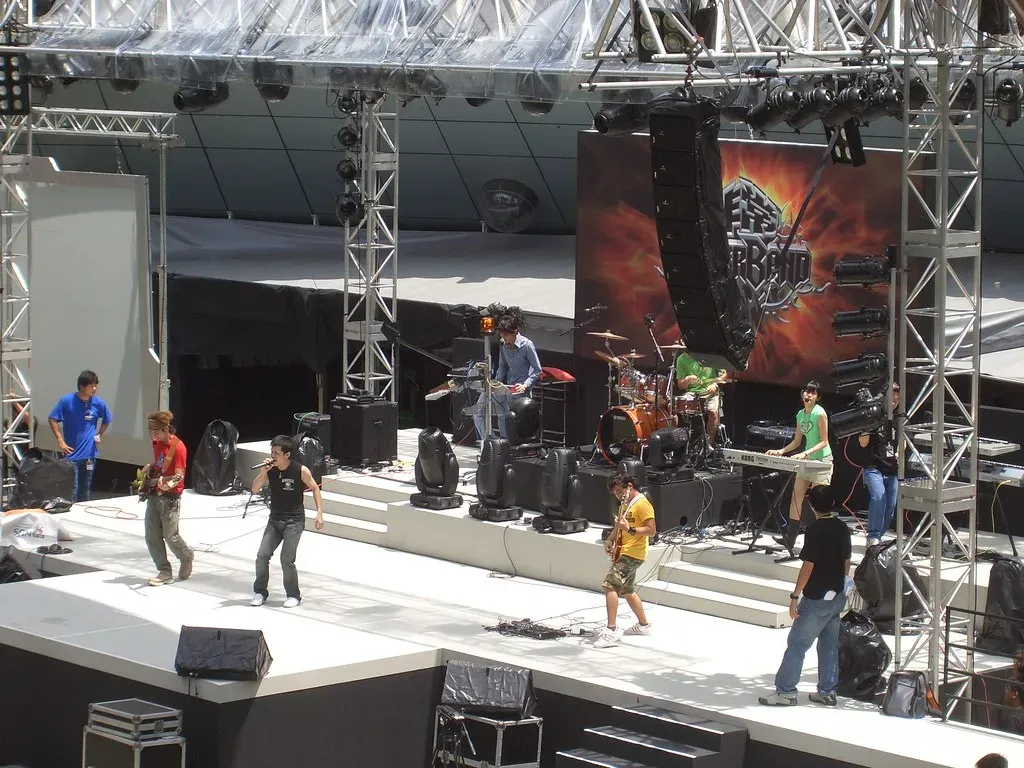
That is the usual shape of a big-company comeback: showcase or concert, a week of online variety content, then music shows. Treasure's 2026 run started the same way in one respect, with the first music show date announced as a milestone. Their first stage for "Shock" was on MBC's Show! Music Core on Saturday, November 7, and SBS's Inkigayo the next day. Music Core airs live on Saturdays at 3:30 PM KST from Goyang, and Inkigayo airs on Sundays at 3:20 PM, so a group can hit both back to back. M Countdown has aired Thursdays at 6 PM.
Release day: the 6 PM slot and the first 24 hours
Most albums release at 6 PM KST. The September 2026 calendar shows Verivery, Minho, Soyeon and Evan all on September 7 at 6 PM, with Jisoo and Monsta X on September 4 at 1 PM. In winter, 6 PM KST is 4 AM on the US East Coast.
Streaming charts reward breadth, not repetition. Since Melon's July 2020 overhaul, a listener's repeat plays of a song within 24 hours don't add to its chart position, according to Koreaboo's account of Melon's changes. Looping a song all day won't lift it. Getting more individual accounts to play it will.
Physical album sales are tracked differently, and the first number to circulate is "chodong" (초동), the first-week album sales count. Hanteo, the private tracker, is the only company that publishes a real-time first-week count. A sample from this autumn: TWS's "TO US", released November 2, 2026, sold 825,360 copies in its first week on Hanteo, with 634,871 of those on day one. That's roughly 77 percent of the week in one day. P1Harmony's "BLOW UP" sold 601,391 in its first week and over 540,000 on day one, so the front-loading is even sharper there. The takeaway is that a first-week number is mostly a release-day number.
Music show chart rules compared
Each broadcaster publishes its own formula, and each uses a share system: the leader in each category gets the full points and the others get a proportion. The table below summarises the formulas as of November 2026 for three shows, plus Music Bank's last published split. Treat percentages as snapshots, because the shows change them.
| Show | Day | Weights | Notes |
|---|---|---|---|
| Music Bank (KBS) | Friday | Digital 60%, broadcast 20%, fan vote 10%, album 5%, social 5% | 200,000 points; scores shown down to 20th place; social score includes YouTube and TikTok |
| M Countdown (Mnet) | Thursday | Digital 50%, album 15%, social 15%, global fan vote 10%, Mnet airplay 10%, plus 10% live vote for top 2 | Song must be within 4 weeks of release; 3 wins removes it |
| Show! Music Core (MBC) | Saturday | Digital 50%, album 10%, video 10%, broadcast 5%, viewer panel 5%, global vote 10%, live vote 10% | Weights in force from May 30, 2026 |
| Inkigayo (SBS) | Sunday | Digital 50%, social 20%, album 10%, on-air 10%, pre-vote 5%, live app vote 5% | 10,000 points; 3 wins removes it |
A few details change who wins. Inkigayo's social slice counts YouTube views of the official music video, so a song with no MV earns nothing there. At M Countdown, the album score comes from the Circle album chart, and second title tracks on the same album don't get an album score. Mnet said in a January 2024 revamp of its chart formula that it would add short-form video use to its social measures. Music Bank uses a simple share of the total rather than the full-marks-to-the-leader method, according to a fan-maintained wiki.
Shows also skip weeks. M Countdown didn't air during the Lunar New Year holiday in February 2026, so that week's winner was never shown on TV. If a group's promotion window is two weeks, a skipped episode can end the run before they get a chance to win.
Hanteo, Circle and Billboard count albums differently
Circle Chart (the former Gaon Chart, renamed on July 7, 2022) is the official chart of the Korea Music Content Association. Circle Chart's official FAQ on album counting defines its album chart as wholesale shipments minus returns, runs weekly Sunday to Saturday and publishes on Thursdays at 11 AM. Hanteo measures sales in near real time at participating retailers. According to a fan-edited Hanteo summary, a preorder isn't a sale until delivery to the buyer begins.
Those definitions explain why one album can have two numbers. Weekly windows differ as well: KickFlip's October 2026 EP was #1 on Hanteo's week of October 5 to 11 and Circle's retail chart for October 4 to 10.
Circle also counts different media separately even when the tracklist is identical. Platform albums such as Weverse, POCA, Nemo and SMC versions are approved for counting if distributed through physical album channels. A comeback with several formats can therefore post separate lines for each.
Volume is large. Circle data shows about 79 million physical albums in the first nine months of 2026, roughly 7.6 million above the same period in 2025. Korean industry commentators say a good share of that comes from duplicate purchases for fansign entries and photocard collecting.
Billboard has its own method. The US chart counts physical albums when they ship to the consumer. Billboard changed its rules in July 2020, and its announcement on ending ticket and merch bundles excluded baked-in merchandise from chart counts. It later allowed limited "fan packs" that Billboard and Luminate must approve in advance.
Reading a comeback calendar without getting caught out
- Convert the time first. Schedulers use KST, which is UTC+9, and a 6 PM release is early morning in the Americas.
- Check for a pre-release. The single may come two weeks before the album, so the date on the poster may not be the first audio.
- Note the music show eligibility window. M Countdown's cutoff is four weeks after release, and Music Core limits each artist to one song entered within two months.
- Look for skipped broadcasts around holidays. Wikipedia's 2026 list shows at least seven Sundays when Inkigayo didn't air a ranking.
- Treat the first-week number as a Hanteo number unless it says Circle. The two sources use different weeks and different definitions.
- Use the program's own weekly chart notice for the formula. Broadcasters revise weights, and fan wikis lag behind.
Frequently asked questions
How far ahead is a K-pop comeback announced?
Most companies confirm a comeback three weeks to a month before release, according to Korean industry reporting. The announcement is usually a scheduler image posted at midnight KST. Examples from 2026 run from about 22 days for a standard EP countdown to 28 days for I.O.I's anniversary comeback, which included a pre-release single two weeks before the album.
What time do K-pop albums come out in Korea?
Most 2026 releases land at 6 PM KST, though some arrive at 1 PM or 9 AM, especially solo singles and pre-releases. In winter, 6 PM KST is 4 AM US Eastern and 9 AM UTC. The exact hour is always printed on the scheduler, so check that image rather than assuming a standard slot.
How does a K-pop act win a music show?
Each weekly show combines streaming, album, social media or video, broadcast and fan vote scores. The top two or three candidates then get a live vote. Weights differ by show, and three wins on Inkigayo or M Countdown triggers a triple crown that removes the song from contention. Songs also expire from eligibility after about a month or two.
What is the difference between Hanteo and Circle Chart?
Circle Chart, run by the Korea Music Content Association, counts album shipments to retailers minus returns and publishes weekly. Hanteo is a private tracker that counts sales in near real time and supplies the first-week figure called chodong. Circle numbers can be higher because shipped copies count even if unsold. Neither is the only real number.
What is a K-pop comeback showcase?
A comeback showcase is a launch event where a group performs the new songs for the first time and talks about the album. Some are held in a venue, others are TV broadcasts streamed worldwide. Tomorrow X Together's November 2026 showcase aired on Mnet and on YouTube, six days before their first music show stage.