Double Eyelid Surgery in Korea: Incision vs Non-Incision
How double eyelid surgery in Korea works: incisional vs non-incisional methods, 2026 prices in won, recovery day by day, and the real risks.
Double eyelid surgery in Korea comes down to one choice: tie the crease in with buried thread (non-incisional) or cut along the crease line (incisional). Non-incisional surgery means less swelling and a faster recovery, but the crease can loosen. Incisional surgery lasts longer and can remove fat and skin, but it takes weeks to settle. In November 2026, Korean-language price guides run from about ₩300,000 to ₩1.5 million ($225 to $1,120) for non-incisional and ₩800,000 to ₩4 million ($600 to $2,990) for incisional, at roughly ₩1,338 to the dollar.
Three methods, and what the Korean names actually mean
A double eyelid crease is the fold in the upper lid. It forms where the lid skin attaches to the muscle that opens the eye. Every method is a different way of creating that attachment.
- Non-incisional (매몰법, "buried suture") is a thread-based method. Several micro-holes are made along the planned crease line, and a fine thread is passed through them to form the fold. No skin is removed.
- Partial incision (부분절개) is the middle option. A very small opening is used to remove excess fat, and the line is then fixed in place the way a buried suture would be.
- Full incision (절개법) follows the whole crease line. A strip of skin is removed and the fold is fixed to deeper tissue.
One thing you'll see on Korean booking apps is 자연유착 ("natural adhesion") listed as a separate product from 매몰. They work on the same principle, and many clinics now apply the newer name to an upgraded version of the older technique. One example given is five fixation points for the older version and seven for the upgrade. Treat it as a variation within non-incisional surgery, not a third category. Ask how many points, which thread, and what the surgeon does differently for your lid.
| Non-incisional | Partial incision | Full incision | |
|---|---|---|---|
| Typical Korean price list (2026) | ₩500,000–1,000,000 (about $375–$750) | ₩800,000–1,300,000 (about $600–$970) | ₩1,000,000–1,500,000 (about $750–$1,120) |
| Surgery time | 20–40 minutes | Varies | 60–120 minutes |
| Stitch removal | None | Varies | Around day 5–7 |
| Early swelling | 1–2 weeks | Between the two | 2–4 weeks |
| Crease durability | Can loosen | Fat removal plus a fixed line | Structurally stable |
Prices are averages from one Korean clinic guide. Other guides run higher, as the cost section below shows.
Which eyelid suits which method
Age gets quoted a lot. A common rule is that people in their early 20s with thin skin do fine with non-incisional, while people in their 30s and up with puffiness need incisional. That's a proxy. The real factors are lid thickness, fat volume and how much the skin sags.
Here's how those factors play out:
- Thin lid, little fat, good skin tone: non-incisional suits these lids. The buried thread has little weight to hold up.
- Thick or fatty lid: the weight of the lid can beat the strength of the thread, so the attachment is more likely to loosen. Non-incisional technique can't meaningfully reduce that volume.
- A previous crease that slipped or doubled up: incisional is the usual route for these revisions.
- Reversibility: non-incisional is easier to undo. Sutures can sometimes be removed before adhesions mature, but it isn't reliably reversible once healing is done. Don't count on it as an undo button.
I'd call "less invasive means safer" overrated. A buried-suture crease that fades in two years costs you a second surgery. The method should match your tissue. Downtime alone shouldn't decide it.
What double eyelid surgery in Korea costs in 2026
Price lists disagree, and the spread tells you something. Korean-language guides put non-incisional at ₩300,000–1,500,000 and incisional at ₩800,000–4,000,000. One review app's data lists a lowest buried-suture price of ₩419,000 and a lowest incisional price of ₩770,000 ($313 and $575). Those are entry prices, and rarely the full bill.
English-language sources run higher. One facilitator reports 48 written quotes from five Gangnam clinics (2024–2026), at about US$1,450–1,930 for double eyelid surgery. That's roughly ₩1.9–2.6 million at today's rate. Another guide lists ₩1.0–1.5 million for non-incisional and ₩1.5–2.5 million for incisional. From the price lists alone I can't say how much of the gap is interpreter service, aftercare packages or a different clinic tier. Ask what the quote includes.
Extras that raise the total:
- Ptosis correction (눈매교정): often adds ₩300,000–700,000 ($225–$520), though other guides say ₩500,000–1,000,000 or more when combined with canthoplasty.
- Ptosis with a crease-less lid: one Korean clinic lists ₩4.2–5.1 million, VAT included ($3,135–$3,810).
- Revision surgery: the same facilitator's quotes ranged from ₩2.7 million to ₩9.9 million ($2,010–$7,360).
Recovery timeline, day by day
Timelines vary by surgeon and by person. This one blends Korean clinic guides with general upper-eyelid recovery guidance.
- Days 1–3: Swelling and bruising peak around days 2–3. Expect tight, shiny lids, blurry vision from ointment and some light sensitivity.
- Days 5–7: With incisional surgery, stitches come out around day 5–7, and daily life usually resumes within one to two weeks. Non-incisional has no stitches, and one Korean clinic puts its recovery at about seven days versus two to three weeks for incisional.
- Weeks 2–4: Incisional recovery typically shows visible swelling and a pink scar line for 2 to 4 weeks. Reviews on the Gangnam Unni app suggest buried-suture swelling mostly fades in 1–2 weeks and incisional in 1–2 months.
- Months 3–6: The final crease shape settles over roughly 3 to 6 months. Judge the result then, not at week two.
If you're flying in, many medical-tourism patients stay about the first week so the surgeon can check swelling, incision healing and eye comfort before travel. I'd treat seven days as the minimum, and add buffer if you're having ptosis correction or a revision.
Risks and revision rates
All eyelid surgery shares the baseline risks. Recognized risks include bleeding, infection, asymmetry, an uneven or fading crease, scarring, dry or irritated eyes, difficulty closing the eyes, and revision surgery.
Asymmetry is the one that actually shows up in the data. In a seven-year analysis of complaints about Asian blepharoplasty, asymmetry accounted for 41.7% of primary and 48.0% of revision double eyelid complaints. Differences in crease height made up most of that category. That study's analysis of complaints about Asian blepharoplasty counted complaint cases, not all patients, so it can't give you a real-world complication rate.
Rates reported in studies vary a lot:
- In one series of 86 patients operated on by one senior surgeon, asymmetry was 12.35% and a narrower crease was 8.64%.
- Revision rates for cosmetic blepharoplasty have been reported as high as 12–52%. That paper's own figure was 3 of 97 patients.
- In a revision study of 137 eyes, 37 had developed iatrogenic ptosis (a drooping lid caused by the surgery) and 11 had upper eyelid retraction. These are revision patients, so the numbers describe a selected group.
Non-incisional surgery adds one risk: the crease can thin or vanish, particularly with thick lids, eye rubbing or weak thread placement. The fix is re-stitching or switching to an incisional method.
The ptosis check that decides whether the crease holds
Ptosis means the lid margin sits lower than it should because the lid-lifting muscle is weak. It's easy to miss. A meaningful proportion of patients seeking double eyelid surgery have some degree of it. If surgery is done without addressing it, the ptosis and asymmetry can get worse. A study of subclinical ptosis in Asian patients argues that even mild ptosis should be assessed before a crease is created.
Combining ptosis repair and a crease is hard to get symmetrical. In an older study of 264 patients, only 30% of eyelids were perfectly symmetric after surgery. The rest looked symmetric at first, and asymmetry appeared six months later. That doesn't mean skip it. It means ask your surgeon how they measure lid function and what happens if the two sides heal differently.
Insurance in Korea draws a hard line here. Ptosis surgery that treats a condition such as a visual field problem is covered by national health insurance, and surgery for appearance isn't. The coverage standard applies only when the lid covers half of the pupil on straight-ahead gaze. A purely cosmetic crease isn't covered, and private indemnity insurance doesn't cover it either.
Safety checks before you book
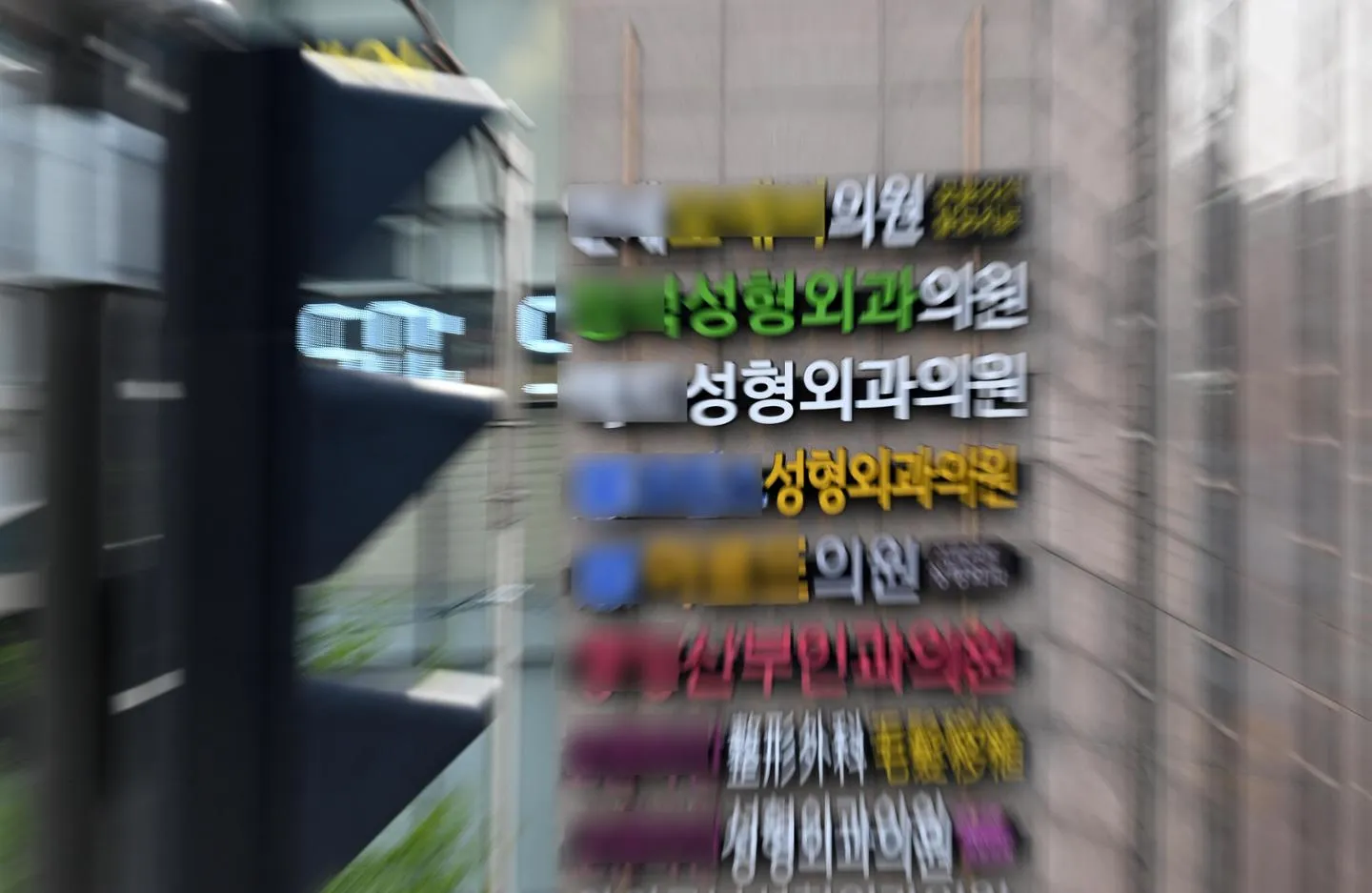
Plastic surgery and dermatology make up most foreign patient demand, and Seoul accounted for roughly 85% of international patients' medical spending in 2024. That volume is why clinics, brokers and ad copy are everywhere. These checks cost nothing:
- Confirm registration. Korea's registration system for foreign-patient clinics has required medical malpractice liability insurance since 2016. As of March 2025, 3,114 institutions and 1,927 agencies were registered. Registration isn't a quality guarantee. It isn't the same as a guaranteed clinical outcome.
- Know who operates. Confirm the treating doctor, who performs each step, the written estimate, and how to reach the clinic after you've flown home.
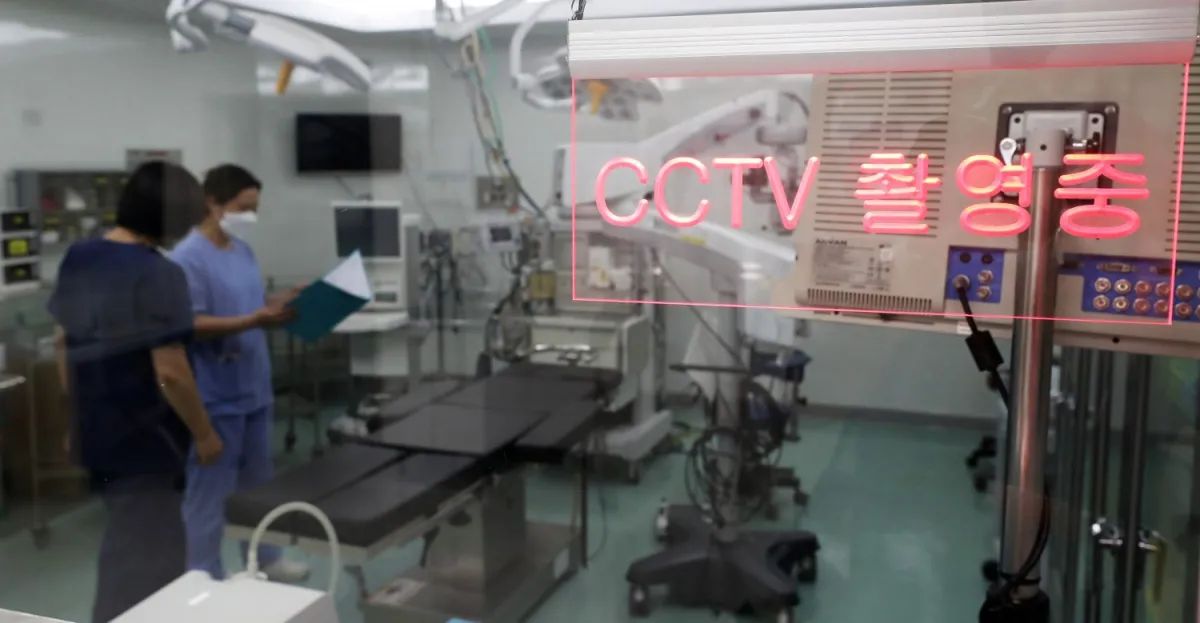
- Ask about filming. Since September 25, 2023, clinics that operate on patients who are unconscious must install operating-room CCTV and film when a patient or guardian requests it. Under the mandatory operating-room CCTV rules, footage must be kept for at least 30 days. The rule covers general anesthesia and sedation, not operations on awake patients under local anesthesia. If you want filming, ask in advance and submit the request form.
- Book with a board-certified plastic surgeon. Have them examine your lids in person, discuss ptosis, and set out the risks before you pay a deposit.
The VAT refund is gone, so budget for the full price
Korea's VAT refund for foreign patients, introduced in 2016, returned 10% of the VAT after treatment. Double eyelid surgery was on the list of eligible treatments. In December 2025 the National Assembly passed its tax bills without extending it, so the refund lapsed at the end of 2025. Plenty of English guides still carry pre-2026 prices that assume a refund.
The change was modest for any one patient. The refund was estimated at about ₩100,000–200,000 per person across cosmetic procedures. Still, budget about 10% more than older sources suggest. Two bills to bring the refund back were reported to be under discussion in the National Assembly, and neither had passed as of the latest report I found. Don't subtract a refund you can't claim. If a clinic promises one for 2026 treatment, ask for the legal basis in writing.
Frequently asked questions
How much does double eyelid surgery cost in Korea in 2026?
Korean-language price guides in 2026 put non-incisional surgery at roughly 300,000 to 1,500,000 won (about $225 to $1,120) and incisional surgery at roughly 800,000 to 4,000,000 won (about $600 to $2,990). English-language quotes from Gangnam clinics tend to sit higher. Ptosis correction, fat removal and anesthesia add cost, so ask for a written, itemized estimate.
How long should I stay in Korea after double eyelid surgery?
Plan on about one week. Incisional surgery usually involves stitch removal around day 5 to 7, and swelling peaks around days 2 to 3. Non-incisional surgery has no stitches, but many clinics still want a check within the first week. Leave extra days if you also have ptosis correction or a revision, since those can take longer.
Is non-incisional double eyelid surgery permanent?
Not reliably. The crease is held by buried thread and the scar tissue that forms around it, so it can soften or disappear, especially with thick or heavy eyelids. Incisional surgery is considered more durable because the fold is anchored to deeper tissue. Neither method carries a guarantee, and a surgeon should judge your lids in person.
Can tourists still get a VAT refund on double eyelid surgery in Korea?
No. The 10 percent VAT refund for foreign patients on cosmetic procedures, in place since 2016, ended on December 31, 2025. Clinics cannot issue refund documents for treatment received from January 1, 2026. Reintroduction bills have reportedly been proposed in the National Assembly, but none had passed as of mid-November 2026, so don't budget for a refund.
What is the most common problem after double eyelid surgery?
Asymmetry is the most frequently reported complaint, usually in crease height or shape. One analysis of complaints about Asian blepharoplasty found asymmetry behind about 42 percent of primary and 48 percent of revision complaints. Other risks include bleeding, infection, a crease that fades, visible scarring, dry eyes and, rarely, trouble closing the eyes. Revision surgery is sometimes needed.
This article is general information, not medical advice. Results, risks and costs vary from person to person. Talk to a board-certified plastic surgeon before making any decision about surgery.