Rhinoplasty Cost in Korea 2026: Prices and What's Included
Primary rhinoplasty in Korea runs roughly ₩2.5M–₩6M ($1,900–$4,500) in Nov 2026. See what quotes include, VAT, extras and deposit rules.
Rhinoplasty cost in Korea for a standard bridge-and-tip operation runs about ₩2.5 million to ₩6 million ($1,900–$4,500) in Korean-language price guides as of November 2026, and foreign-facing packages are often quoted higher. The figure on a clinic's menu is rarely the final bill. Anesthesia, 10% VAT, cartilage harvesting and follow-up visits decide whether a quote is complete, and clinics handle each of them differently.
All dollar figures below use about ₩1,336 per US dollar, the closing rate on November 16, 2026. This article is consumer information, not a recommendation of any clinic or surgeon. Prices are advertised ranges, not quotes, and your own nose will be priced after an in-person exam.
Rhinoplasty cost in Korea by procedure type
Korean clinics price the nose in parts. Bridge augmentation (융비술) raises the nasal bridge, usually with a silicone or Gore-Tex implant. Tip plasty reshapes the nasal tip, usually with your own ear or septal cartilage. Alarplasty narrows the nostril wings. Revision surgery corrects a previous operation. A "full" nose job normally combines the first two.
The table pulls from two Korean-language 2026 price guides, one listing 2026 Seoul averages by procedure and a second from a clinic magazine, plus a third guide for the non-surgical row. Both are commercial pages, so read them as market ranges.
| Procedure | Typical range (KRW) | Approx. USD |
|---|---|---|
| Bridge implant only (silicone) | ₩1.0M–₩2.5M | $750–$1,870 |
| Tip plasty with own cartilage | ₩1.0M–₩3.0M | $750–$2,250 |
| Bridge plus tip (most common) | ₩2.5M–₩6.0M | $1,870–$4,490 |
| Alarplasty (nostril reduction) | ₩0.5M–₩1.5M | $375–$1,120 |
| Revision surgery | ₩3.0M–₩7.0M | $2,245–$5,240 |
| Full rebuild with rib cartilage | ₩5.0M–₩10.0M+ | $3,740–$7,490+ |
| Filler "nose job" (non-surgical) | ₩0.2M–₩1.5M | $150–$1,120 |
The source figures behind those rows: bridge plus tip at ₩2.5–6 million, revision at ₩3–7 million, and full rib-cartilage reconstruction at ₩5–10 million or more. A second guide puts bridge-only work at ₩0.8–2 million and combined bridge-and-tip surgery at ₩3–5 million. Material matters too: Gore-Tex usually costs ₩100,000–300,000 more than silicone.
The filler row is the least reliable. One guide lists ₩700,000–1.5 million with results lasting 6–12 months, while another lists ₩200,000–800,000. Filler is also repeated every year or so, so the cost over time can pass a one-off surgical fee.
Why English and Korean price guides disagree
Search for rhinoplasty cost in Korea in English and you'll get numbers that don't match each other. A medical-travel marketplace says $2,400 to $5,000, as of November 2026. A clinic-survey guide says $2,100–$3,500 (₩2.8M–₩4.7M) for a standard primary case. A facilitator's own price guide quotes $5,200 for a primary all-inclusive case, and another says $4,500–$8,000.
Three things explain most of the spread.
- Promotions versus typical prices. One 2026 guide notes that full rhinoplasty commonly costs ₩4.0–5.5 million, yet it also listed a limited ₩1.5 million primary bridge-and-tip deal that had to be used by September 12, 2026. Deals like that exist, but they are not the market price.
- What the package covers. An all-inclusive foreign-patient package and a Korean-market surgeon fee are different products.
- The exchange rate. The won moved a lot this year. The dollar's range this year ran from about 1,323 to 1,556 won, with the high on July 2 and the low on October 26. A ₩5 million quote was about $3,210 at the July peak and is about $3,740 now. That is a 16% swing with no change in the Korean price.
For comparison with the US, remember the benchmark most people quote isn't like for like. The American Society of Plastic Surgeons average is a surgeon fee of $7,637 that excludes anesthesia, the facility, tests and prescriptions. A Korean all-in package and a US surgeon-only number sit on different bases.
What a rhinoplasty quote in Korea usually includes
There is no legal standard for what a nose-job price must cover. A 50-clinic survey says that at most reputable clinics, the quoted price covers surgery, general anesthesia, the surgeon fee, the operating room, a one-night stay if needed, basic medication, the splint and stitch removal. Another guide lists the pre-operative consultation and necessary pre-op tests as part of the usual package.
Korean-language advice is more cautious. One consumer-oriented guide says anesthesia method and follow-up visit counts differ by clinic, and you should ask whether medication, cotton removal and check-ups are included. A clinic's own posted fee sheet shows why: it lists general anesthesia as a separate line at ₩1 million. Korean clinics must report their non-covered fees, and since a 2023 rule change all medical institutions report their fees and itemised certificate charges to the national review agency, so many post a fee sheet on their sites.
Ask for the quote in writing and check these lines:
- Surgeon fee and operating time
- Anesthesia type, and whether an anesthesiologist attends
- Implant or cartilage material, by name
- Cartilage harvesting (ear, septum or rib)
- Medication, splint, cotton and stitch removal
- Number of follow-up visits and any revision terms
- VAT: included or added
VAT and the foreigner refund that ended in 2025
Cosmetic rhinoplasty is a taxable service in Korea. One surgeon's column states that cosmetic nose surgery is subject to VAT, so you should confirm whether the quoted amount includes it. Clinic price sheets show both styles: one clinic adds 10% VAT on nose surgery and another states its prices exclude VAT. A "₩5 million" nose job priced ex-VAT is ₩5.5 million at the counter, or about $4,120.
The refund foreign patients used to count on is gone. Multiple clinic and industry reports say the special VAT refund for cosmetic procedures given to foreign patients ended on December 31, 2025. Any treatment on or after January 1, 2026 is out of scope. The ordinary tourist refund on shopping is separate, and one clinic notes that the standard tourist VAT refund on goods at participating stores is unchanged. Older guides that promise 10% back are out of date, so budget about 10% more than they suggest.
Extras that move the total
The base price assumes a simple case. These items are where totals grow.
Rib cartilage. Rib cartilage is the stiff cartilage from the chest, used when ear or septal cartilage isn't enough, typically in revisions or short noses. It comes from a roughly 2 cm incision along the line under the chest, and it needs a separate procedure that leaves a small scar. One survey puts the harvest at $800–$2,000 on top of the base price. Many Korean clinics quote rib surgery as a bundled price instead.
Bone work and special cases. One clinic's posted price sheet adds ₩500,000–1 million each for a hump nose, upturned nose, arrow nose or revision. That sheet is undated, so use it as a picture of how add-ons are priced, not as a current rate.
Revision. One guide says revision can cost 1.5 to 2 times the primary surgery. It takes longer, and scar tissue and thinner skin limit the materials you can use. Silicone implants are a common reason for it. One report says artificial implants such as silicone are the norm, and reoperation after capsule contracture is not rare.
A Korea Consumer Agency mediation decision shows the scale. In a dispute over eye and nose surgery that needed redoing, the original operation cost ₩6.5 million, of which ₩4.3 million was for the nose, and the revision at another clinic in 2021 cost ₩10 million. That is a single case, but it shows that a cheap first operation can cost more later.
Insurance. Cosmetic rhinoplasty isn't covered. Surgery with a functional problem such as a deviated septum can be covered for that part only, and the cosmetic portion stays out of pocket.
Deposits, written quotes and cancellation
Clinics often ask for a deposit to hold the surgery date, and the Korea Consumer Agency has tracked the disputes this causes. The Fair Trade Commission's consumer dispute standard sets refunds by timing: 90% of the deposit if you cancel at least three days before surgery, 50% two days before, and 20% one day before, and nothing on the day. The same notice says that where the deposit exceeds 10% of the surgery fee, the refund is calculated on 10% only.
In practice the rules are not always followed. A Consumer Agency review of 2016 to early 2019 found 250 of 272 prepayment complaints (91.9%) involved paying on the day of the visit after a discount offer. The agency's own consumer-advice page adds that if tests were already done, the testing fee is deducted from the refund. The data are a few years old, so check the current version of the standard, which is published on the government's consumer portal.
A sensible order is consultation, written itemised quote, then deposit. Sleeping on a same-day discount costs you very little.
Choosing and verifying a clinic, then budgeting the trip
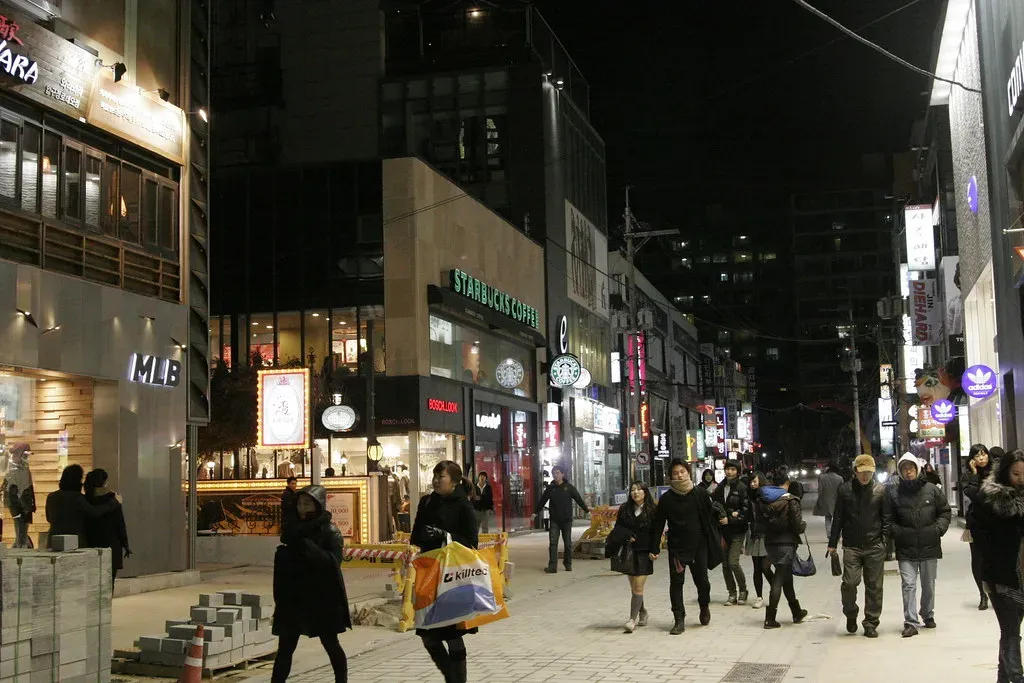
Korea is crowded with options. Plastic surgery drew 233,100 foreign patients in 2025, 11.2% of all foreign patients counted by department, out of 2,011,822 foreign patients in total. Most of the clinic cluster you'll see online sits in Gangnam. Apgujeong and Sinsa are described as the plastic surgery clusters, with Gangnam Station offering convenient and often cheaper clinics. Many clinics there list directions from Apgujeong Station on Line 3, Exit 3. Distance from the station doesn't tell you about surgical skill.
Two checks cost nothing. First, check that a clinic serving foreign patients is registered. Under the foreign-patient attraction law, institutions that treat foreign patients must register and must have at least one specialist per department and malpractice insurance covering foreign patients, with registration valid for three years. Registration is an eligibility check, not a quality ranking. Second, confirm the surgeon who will operate is a board-certified plastic surgeon, and have that person, not only a coordinator, explain the plan and the risks. Standard rhinoplasty risks include bleeding, infection, anesthesia reactions, narrowing of the nostrils and undesirable cosmetic change.
For time, one Gangnam medical-travel guide says to plan 7–10 days for eyelid or nose surgery. Swelling takes much longer to resolve. A US ENT practice notes that it can take a few months for the nasal skin to return to normal and about a year for complete recovery. Your surgeon sets the real timeline, so confirm splint removal and the flight-clearance date in writing before you buy tickets. Add flights, lodging and a margin for the won moving against you, and the clinic's quote will be only part of the total.
Frequently asked questions
How much does a nose job cost in Seoul in 2026?
Korean-language price guides in 2026 put a standard bridge-and-tip nose job at roughly ₩2.5 million to ₩6 million, about $1,900 to $4,500 at ₩1,336 per dollar. Implant-only work starts near ₩1 million, while revision and rib cartilage surgery can reach ₩7 million to ₩10 million or more. Treat every figure as a range and get an itemised written quote.
Is VAT charged on cosmetic nose surgery in Korea?
Yes. Cosmetic rhinoplasty is a taxable service, so 10% VAT applies, and many clinics list their prices as VAT-exclusive. The special VAT refund for foreign visitors ended on December 31, 2025, so surgery in 2026 gets no refund. Ask whether your quote is the final VAT-inclusive total, because a ₩5 million quote can become ₩5.5 million.
Does insurance cover rhinoplasty in Korea?
Cosmetic rhinoplasty is not covered by Korean national health insurance, so you pay the full fee. Surgery that treats a functional problem such as a deviated septum can be partly covered, but only for the functional part. Foreign visitors should also check whether their travel or home insurance covers complications abroad, since most plans exclude elective cosmetic surgery.
Why do Korean nose job prices differ so much between clinics?
The range comes from what is being done and with what. Implant-only bridge work costs far less than cartilage tip surgery, and rib cartilage or revision work costs more again. Anesthesia, VAT, cartilage harvesting and follow-up visits are included at some clinics and billed separately at others. Surgeon experience and promotions also move the headline number.
How long should I stay in Seoul after a nose job?
One medical-travel guide to Gangnam suggests planning 7 to 10 days for nose or eyelid surgery. Your surgeon decides when the splint comes off and when you can fly. Swelling keeps settling for months, and a US ENT practice says full recovery takes about a year on average. Confirm the follow-up schedule in writing before you book flights.
This article is general information, not medical advice. Results, risks and costs vary from person to person. Talk to a board-certified plastic surgeon before making any decision about surgery.